
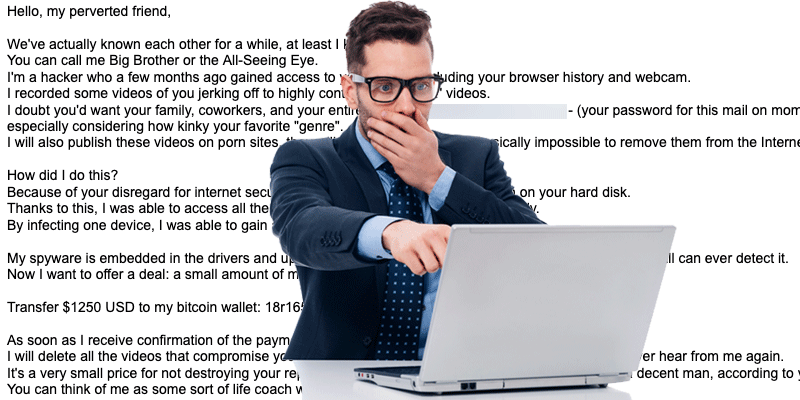
The “Hello Pervert” Sextortion Scam is making a comeback. Ignore and delete.
The “Hello Pervert” (sextortion) scam first made itself known at least ten years ago, but it’s rearing its ugly head once again.
It begins with a random email accusing the potential victim of viewing pornography online and (oftentimes) mentioning that the victim has been observed, via webcam “pleasuring themselves.” The scammer attempts to frighten the intended victim by informing them that the victim’s computer and other devices have been hacked and are now in control of the scammer, infected with malware that the fraudster insists has been installed on the victim’s devices remotely, unbeknownst to the victim. The scammer demands a ransom in cryptocurrency (often specifically Bitcoin) or they promise that they will release all of the victim’s supposed online sexual exploits to everyone in the victim’s email list, stressing how terribly this information will affect the victim’s reputation. But it’s all an empty threat, because they actually have nothing on the victim.
Receiving one (or more) of these emails might raise your heart rate, but calm down. You can run a checklist through your mind: I don’t frequent porn sites, I don’t have webcam (or it’s not even activated) and on and on and on. However, even if you have…indulged…the likelihood of the kind of scary malware infecting your computer, that the scammer describes, is pretty much null.

Many of these emails will reference a password that you might even recognize, and that alone might get the adrenaline churning all over again. Calm down. There had been a data breach many years ago and thousands, even millions, of passwords were harvested and then purchased by spammers. But here’s catch: these passwords weren’t linked to accounts of any kind, including email accounts — they were simply passwords only. Even if you haven’t changed an email password in a while, the scammers still have no idea if that password is still active. But let’s say that the password the scammer references is indeed the password you still use for your email: simply change the password immediately with one containing at least 12 random letters, numbers, and symbols…just in case. Chances are, however, the scammer probably doesn’t even know if the old password works for that specific email address.
The bottom line: These “Hello Pervert” emails are completely bogus and nothing to worry about. Do not reply to these emails; you will only confirm to the spammer/scammers that your email address is valid. As with all spam, do not click on any links and never download attached files whether they are images, Word docs, or PDF files. Lastly, don’t panic, just ignore any imposed “deadlines.” Scammers like to heighten anxiety in potential victims by creating a dire sense of urgency in paying them the demanded ransom…or else. They are counting on you to make a rash decision. And when they “promise” that if paid, you will “never hear from them again,” don’t count on it. Trust and believe that the scammer will share your email with other scammers, and they will in turn demand their ransoms. And if you’re curious about the Bitcoin wallet number the scammers give you, report it to: www.bitcoinwhoswho.com.
In the meantime, delete and ignore. And, by all means, calm down!
More information on avoiding this scam
“I sent you an email from your email account,” sextortion scam claims
In a new version of the old “Hello pervert” emails, scammers are relying on classic email spoofing techniques to try and convince victims that they have lost control of their email account and computer systems.
Email spoofing basically comes down to sending emails with a false sender address, a method in use in various ways by scammers. Obviously, pretending to be someone else can have its advantages, especially if that someone else holds a position of power or trust with regards to the receiver.
But sending a message to the victim’s from their own email address might convince the victim that they have lost access over their own account.
‘Hello pervert’: the sextortion scam claiming to have videoed you
“Hello pervert” is how the email starts and frighteningly it appears to have been sent from your own account. It is a ransom note with the recipient warned that they have been recorded in a compromising act, and will be exposed unless they pay up.
The sender warns “this is a very bad situation for you”, or something similarly threatening.
The email currently doing the rounds is a sextortion scam. It is a phishing attack whereby people are coerced to hand over money by being told they risk having incriminating videos of themselves visiting adult websites shared with friends and family.
Hello Pervert Email Scam: Full Protection Guide for 2025
If you thought the infamous “hello pervert” email scam had died out in the shadows of past inboxes, it’s still around, but it’s even more sophisticated now thanks to AI and other modern technologies. What started as a clumsy, typo-filled blackmail attempt has now become a creepy, well-crafted, and psychologically targeted attack that even experienced users might not spot.
Don’t Panic: How to Beat the “Hello Pervert” Sextortion Scam
You’re scrolling through your inbox, perhaps winding down for the night, when a subject line grabs your attention and sends a jolt of ice through your veins. It’s not just a random spam email. It’s your own email address, or even worse, an old password you recognize instantly. Sometimes, it’s both. The email starts with two chilling words: “Hello, pervert.”
The message that follows is designed to make your heart pound. The sender claims they’ve hacked your webcam, recorded embarrassing private moments, and are now demanding a Bitcoin payment of hundreds or thousands of dollars. Pay up in 48 hours, or they’ll send the footage to everyone in your contact list.