
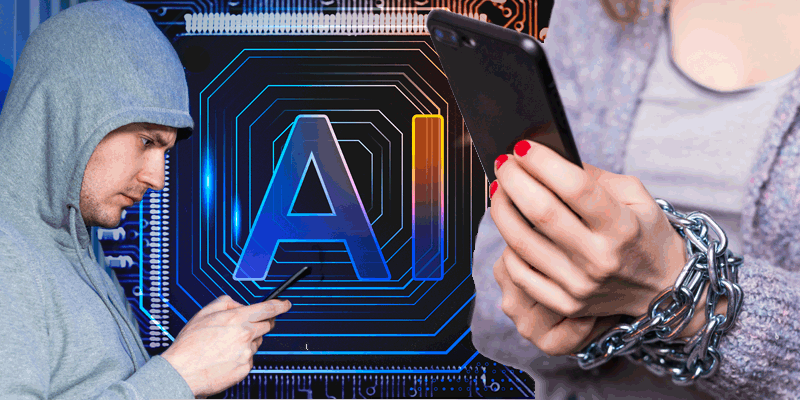
The digital arrest scam: terrorizing you into paying bogus fines
It used to be, in the days of yore, that you’d receive a robocall “informing” you that there was an arrest warrant in your name, or an unpaid traffic infraction ticket or an unpaid parking ticket, and that if you didn’t return their call and pay a “bogus” fine you would be visited by a police officer and arrested. Of course, most recipients of those calls, over time, realized those calls were complete scams, right down to the robotic text-to-speech voice and bad grammar. However now with the aid of AI, fraudsters are convincing enough to hold their targets hostage, harassing them digitally.
The scenarios that scammers use vary, and most rely on terrifying their marks. You might receive a video call from someone claiming to be a law enforcement officer conducting a criminal investigation. They will interrogate you mercilessly, insisting that you are guilty of whatever crime they accuse you of perpetrating. They might also threaten you with additional “bogus” charges, then send you phony AI-generated arrest warrants, pressuring you into paying various fines and settlements. They will be relentless in dogging you, holding you captive for days until exhausted, you just give in to their demands.
Digital arrest has long been a big problem in India, but now this scam has made its way to the United States. To show just how brutal these scammers’ tactics are, in September of 2025 a retired doctor in India endured nearly 70 hours of harassment and subsequently died from a heart attack.
How to avoid becoming a victim of this scam
First of all, never respond to a random email or text of this kind, and definitely do not return phones calls from such voicemails. If you do answer your phone and the person on the other line introduces themselves as law enforcement, just hang up. Understand that law enforcement officers are not in the habit of calling people and threatening to arrest them. Also, court orders and arrest warrants are never delivered via phone calls, emails, texts, or social media DMs. It’s best to know how law enforcement and the court system work.
More Information Regarding the Digital Arrest Scam
Digital arrest scam
Digital arrest scam (also referred to as digital house arrest or virtual arrest) is a form of organized cybercrime and fraud in which perpetrators impersonate law-enforcement, government agencies, banks, or courier companies and coerce victims — often by video call or telephone — into transferring money or revealing financial credentials by falsely claiming the victim is under investigation or has been “digitally arrested.”
Trapped Virtually: Understanding Digital Arrest Scams
A digital arrest scam is a sophisticated cyberattack in which scammers impersonate law enforcement or government officials to extort money from victims. Typically, the scammers initiate contact through calls in which they accuse the victim of involvement in illegal activities such as money laundering or various cybercrimes.
India’s digital arrest scams
The playbook is more or less fixed. You get a phone call from a law enforcement officer implicating you in a serious crime. The caller then offers to connect you to other officials through video calls. They, in turn, explain the charges in thick legalese, buttressing claims with trappings you have come to expect from the justice system.
You are asked not to leave home or even the room you are in, or talk to anyone else, while the investigation proceeds. Strict written instructions are issued: you are not to switch off your phone or laptop camera. Your mundane activities are monitored, sometimes for days on end, accompanied by an unending stream of questions.
Duped of millions in ‘digital arrest’, Indian woman seeks answers from banks
Anjali’s* nightmare began with a phone call that would cost her 58.5m rupees ($663,390; £488,792).
The caller claimed to be from a courier company, alleging that Mumbai customs had seized a drug parcel she was sending to Beijing.
Anjali, a resident of Gurugram, a suburb of Indian capital Delhi, fell prey to a “digital arrest” scam – fraudsters posing as law enforcement officials on video calls and threatening her with life in prison and harm to her son unless she obeyed.
Inside India’s Scariest Scam — and How to Stop It
Digital arrests” are bilking Indians out of millions, leaving trauma and distrust in their wake.
On a hot and humid August morning last year, Biren Yadav was alone at his home in Gurugram, a New Delhi suburb, when his phone rang. The call was from a woman claiming to represent the Telecom Regulatory Authority of India. The caller seemed to know everything about Yadav, a 77-year-old former Indian Air Force officer. She read out his address, national ID and tax account number — all correctly. “One of your phones is transmitting antinational messages,” said the caller. “Unless the cyberpolice clears your name, we have to freeze all your numbers.”